Be yourself; Everyone else is already taken.
— Oscar Wilde.
This is the first post on my new blog. I’m just getting this new blog going, so stay tuned for more. Subscribe below to get notified when I post new updates.
Be yourself; Everyone else is already taken.
— Oscar Wilde.
This is the first post on my new blog. I’m just getting this new blog going, so stay tuned for more. Subscribe below to get notified when I post new updates.
Ciao tutti! This week my class and I explored the Italian way of making and drinking wine.
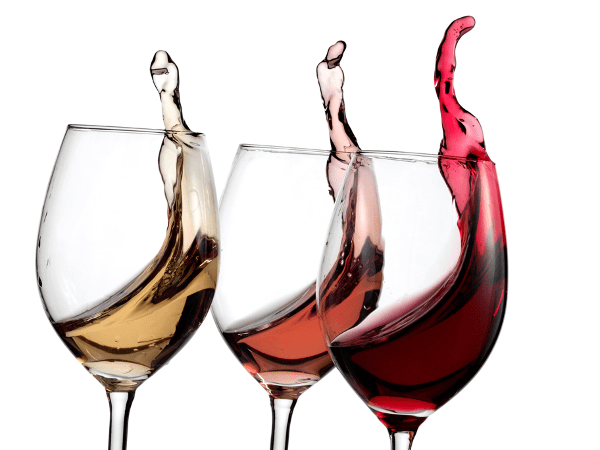
When we think of Italy, we associate the country with their love for wine and beautiful vineyards. For thousands of years wine has been drunk, especially in Ancient Rome where it was consumed more due to unsafe drinking water.
Today, Italians follow a simple approach to wine. They like to drink a glass of wine a day whether at lunch, dinner, or for an aperitivo. Always with a meal! Wine is an integral part of the Mediterranean diet in Italy, which recommends drinking a glass of wine a day. Italians always consume in moderation and make sure to not get drunk off too many glasses.
Wine is linked to the Italian culture in many ways. Not only has wine vineyards brought in tourists from around the world for wine tastings and tours, wine is also linked to art, fashion, food, and the opera. Italian culture around wine represents ‘quality of life’.
Wine commercials show the importance of wine in Italian culture. Showing the importance of drinking wine with family as a symbol of a fine life. A wine commercial called “Italian Wine – Taste the Passion” sponsored by the Italian Trade Agency (ITA) created their commercial to raise awareness about Italian wines and show cultural context and pursuit of quality and biodiversity of wine. Here is the link if you’d like to watch the commercial.
I live in the state of New Jersey. Since I live very close to the New York State border, there are many beautiful wineries with fantastic views of the mountains. One particular winery that is a must-visit is Whitecliff Vineyard and Winery.
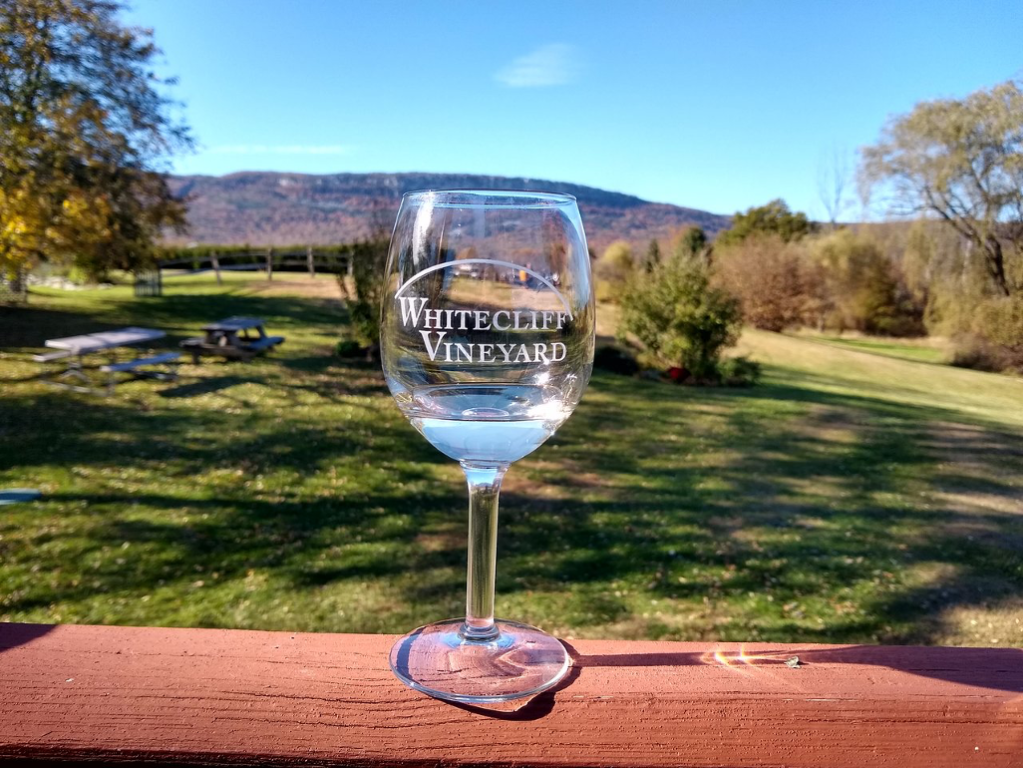
Located in Gardiner, New York, Whitecliff has been operating since 1999 as a family run winery and vineyard. This is of the largest vineyards in the Hudson Valley region, growing 20 varieties of grapes on what was once a dairy farm.
The owner’s, Michael Migliore and Yancey Stanforth-Migliore, mission is, “At Whitecliff we’ve dedicated more than 30 years to finding and planting grape varieties that succeed on our site. We’re dedicated to sustainability, environmentalism, and producing vegan wines we’re proud of.”
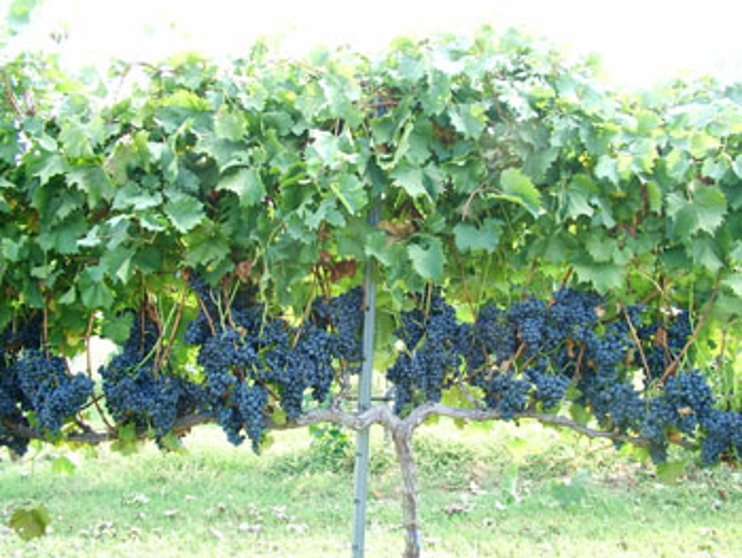
The common grape vine, which is native to the Mediterranean region, Central Europe, and South West Asia is grown here in addition to hybrid grape vines. Whitecliff plants their vines between 4’6” to 5’ apart and in rows 9 feet apart. Michael Migliore says, “If there’s anything that I’ve learned in thirty-six years of growing grapes, it’s that closer planting is better.”
Whitecliff focuses on producing Gamay Noir, Cabernet Franc, Pino Noir, Chardonnay, and Seyval Blanc in their vineyard. However, Riesling, and hybrid grapes, Marquette and Vignoles are grows as well. These grapes are used to produce delicious and unique red, white, rosé, and sparkling wines.
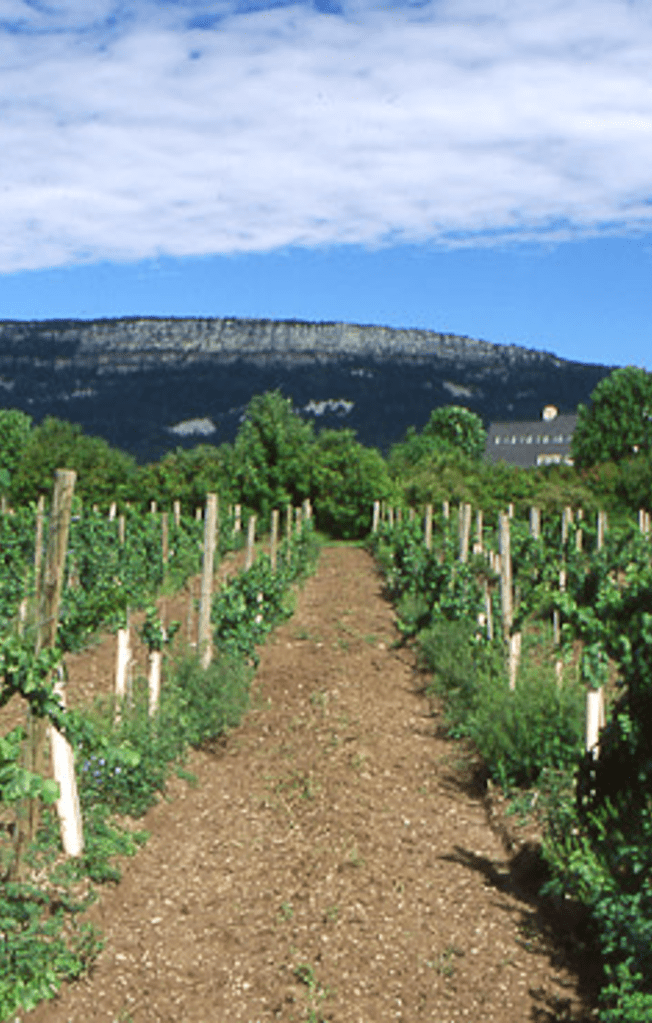
Production is not very typical at this winery and vineyard. Everything is done by hand — except the large job of spraying vines for fungi and insects — with the help of only 10 people. Gravity feed is used to prevent green tannins being released. Also, when red grapes go through the de-stemmer, they are left whole and then moves onto fermentation in order to release more fruit flavors.
A technique used at Whitecliff that I have never heard of before is Geothermal. Because the optimal temperature for winemaking and storage is a very specific 70-75F for fermentation and 55F for aging and storage, this technique regulates those temperatures in fermentation tanks. Geothermal creates a faux above-ground cave environment using coils which extend into the ground 100+ feet from the building. Propylene glycol liquid is used in the coils that either heats or cools by exchanging heat in the ground. This technique is all controlled through a computer software. Super cool!! Micheal Migliore was an organic chemist before going into the wine-making business, so it makes perfect sense as to why he’d implement this technique at his winery and vineyard.
Whitecliff’s signature wine and all-time favorite is Awosting White, which is a light and fruity wine coming from a Vignoles-Seyval Blanc blend.
Prices range from $6-$10 per glass and $12-$34 per bottle.
This is a list of current white, red, rosé, and sparkling wines available at Whitecliff Vineyard and Winery:
Whites:
Vidal Blanc
Seyval Blanc
Gamay Blanc
Dry Riesling
Riesling
Awosting White
Reds:
Gamay Noir
Pinot Noir
Syrah
Cabernet Franc
Two Cabs
Merlot Malbec
Marquette
Red Trail
Rosé:
Barrel Rosé
Dry Rosé
Pinot Rosé
Sparkling:
Awosting White
Dry Rosé
Moscato
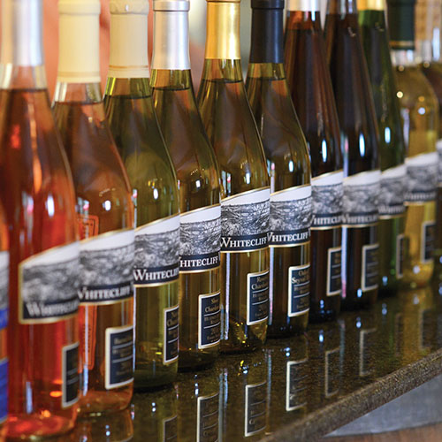
Here is their website if you’d like to check it out! https://www.whitecliffwine.com
Ciao! So, we know all about wine tasting, now here is a bit about Fiano wine.
White grapes are used to make Fiano wine that are grown in the Campania region in Italy. Fiano grapes are also being grown in Puglia and Sicily. These specific type of grape prefers to grow in volcanic soils or clay/heavy soils. Campania is rich with volcanic soil due to the region housing Mount Vesuvius. Fiano wine has honey and floral aroma notes, along with a honey, ripe pear, and toasted hazelnut taste. This is a very acidic and full-bodied wine.
The highest certification of quality a wine can receive is the DOCG. Fiano di Avellino, produced in Avellino, Campania, has that title. DOCG stands for Denomination of Controlled and Guaranteed Origin. Wines labeled as a DOCG have to follow certain guidelines throughout production. For Fiano di Avellino wine, at least 85% of the wine must be made from Fiano grapes. Mixing of grapes is allowed, but with only Greco, Coda di Velope, and Trebbiano grapes. The grapes used in DOCG Fiano di Avellino are limited to a maximum harvest yield of 10 tonnes per hectare. Lastly, these grapes must be fermented to a minimum alcohol content level of 11.5%Alc.
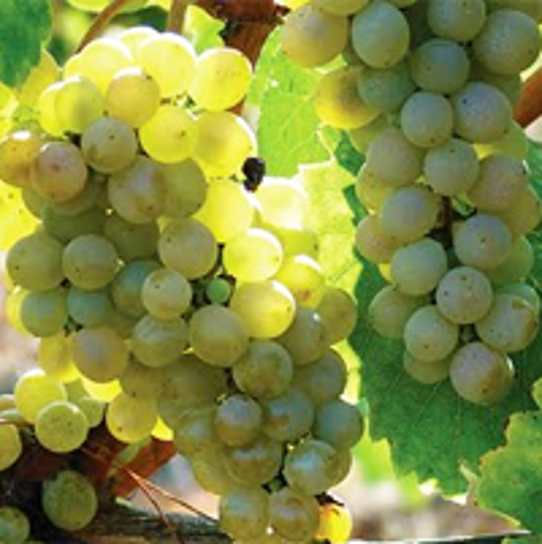
Let’s talk about the history of the Fiano di Avellino wine and grapes. The name ‘Fiano di Avellino’ is derived from what the Latins called, ‘Vitis Apiana’ — ‘api’ in Italian translated to ‘bees’ in English. The Fiano grapes are so sweet that it is said bees found them irresistible. It’s hard to believe, but these grapes originated over 2000 years ago. It is thought that the Fiano grapes used to be used to make an ancient Roman wine called ‘Apianum’. Actually, that name is permitted to appear on some labels of DOCG wines. Fiano grapes were so well-loved, it is said that Charles d’Anjou, Kind of Naples, planted 16,000 vines in the royal vineyard.
Among the many wineries in Italy, Donna Chiara Winery take pride in making their DOCG Fiano di Avellino wine. Donna Chiara Winery is located in Avellino, Campania and has been family run for 5 generations. Their philosophy revolves around less quantity in order to produce higher quality wines. Here at Donna Chiara Winery, Fiano grapes are pressed and cooled at 50 degrees Fahrenheit for 4-6 hours. Next, the grapes are soft crushed with static decantation (to learn more about this click here). The fermentation process then lasts for 15 days in steel vats between 57-60 degrees Fahrenheit. Fiano wines can benefit from 2-3 years of aging.
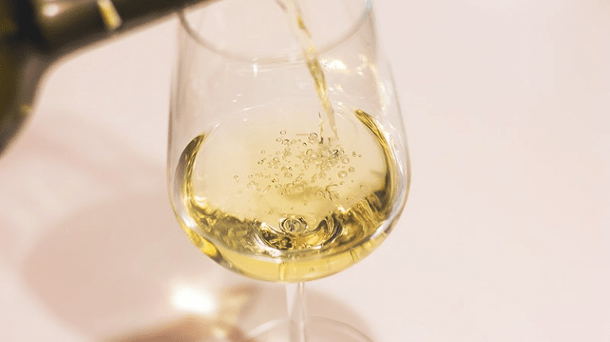
Some good food choices for a Fiano di Avellino wine are rich, creamy dishes or white meats. This includes food such as seafood, roasted chicken, a creamy cheese, or pasta.
Thanks for reading!
Caio! I hope everyone has had a great time these past few week. Today I’ll be talking about the role olive oil has in skincare.
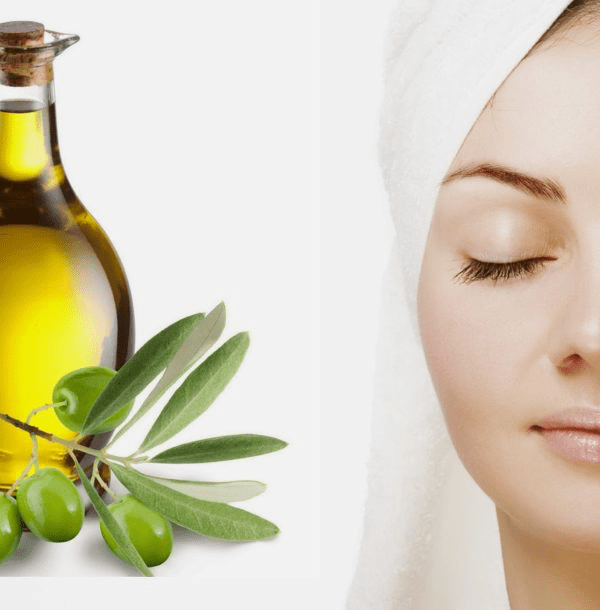
History
Using olive oil for skincare goes way back to 5000 years ago. The Ancient Egyptians, Greeks, Phoenicians, Romans, and other Mediterranean countries. Originally, people of higher social class used olive oil to cleanse their skin; normally paired with essential oils. It is rumored that Cleopatra used olive oil on her skin, so who wouldn’t want to use the same skincare regime as an Ancient Egyptian ruler. Homer, the Greek author of the Iliad and the Odyssey coined olive oil and ‘liquid gold’.
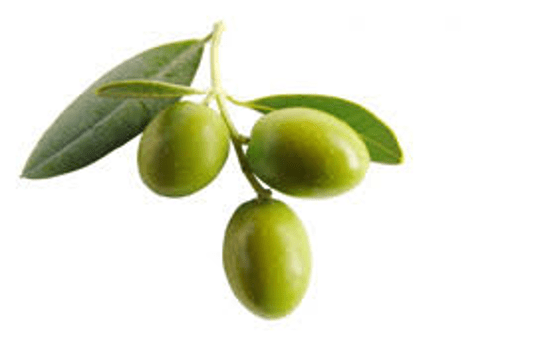
Skin Benefits of Olive Oil
Olive oil has many benefits to the skin. Firstly, it has low comedogenic properties, meaning it won’t clog pores, and it is hypoallergenic so anyone could use it. Olive oil contains strong antioxidants that fight off free radicals. Cell that cause aging are attacked, giving olive oil anti-aging skincare properties. There’s an antioxidant called hydroxytyrosol that has anti-inflammatory properties. This antioxidant can be destroyed during processing, so it’s important to use cold pressed or extra virgin olive oil on your skin. Vitamin E and K present in olive oil is very beneficial to the skin and helps repair and renew skin. Olive oil is able to balance natural skin oils and also creates a barriers that prevents moisture loss. Olive oil traps water between this barrier, leaving skin soft and smooth.
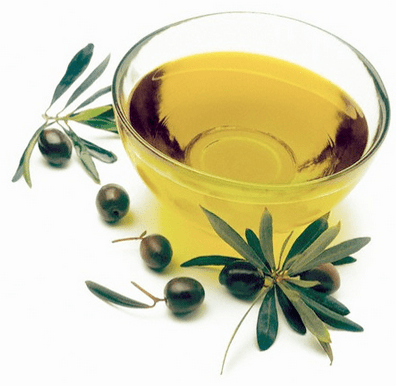
Skin Conditions and Olive Oil
Using olive oil on the skin can help reduce the inflammation from psoriasis. This is due to a chemical compound called squalene, which is only present in extra virgin olive oil. However, research has shown that using olive oil to help with eczema can cause irritation. This irritation may be cause by the oleic fatty acids, leading to doctors not recommending use of olive oil on eczema. As for other skin conditions, such as acne, there is little evidence of on whether or not olive oil can help.
Should We Not Use Olive Oil On Our Skin?
Olive oil is high in oleic and linoleic fatty acids. Oleic acid has been shown to increase water loss through the skin, which is not beneficial to people with dry or sensitive skin. As mentioned above, oleic acid has a negative effect on skin with eczema. In some people, studies show that the top layer of skin (stratum corneum) and cause redness.
Olive Oil Skin Products
Olive oil acts as a base for most moisturizing skincare products. In order to get the best results, it’s better to apply olive oil to damp skin to reduce greasiness. Other skincare products containing olive oil include exfoliators, body scrubs, makeup remover, and more! Here is a link that shows the multiple was to implement olive oil into your skincare routine.
I love using natural products on my face, especially making homemade face masks from honey and turmeric. I will definitely be using olive oil in my skincare routine from now on!
Thanks for Reading!
Caio! I’m back already with another post, this time research on pasta dishes in Italy around the holidays.
Italy is comprised mainly of people who practice the Catholic religion, therefore celebrating holidays such as Christmas and Easter. Christmas Eve dinner is called “il cenone” or “the big dinner”, it’s a time for eating a ton of delicious food with family. Meat is traditionally not eaten on this, so families will cook dishes of pasta or seafood. Keep in mind that within each region and family, dishes may vary.
Christmas in Italy is a huge deal! As a popular saying goes, “Natale con i tuoi e Pasqua con chi vuoi,” or, “Spend Christmas with your family and Easter with whomever you like.” This is the holiday to spend time with family and cook extravagant meals.
I grew up thinking all families in Italy carried out the tradition of the Feast of the Seven Fishes and ate seven or more seafood dishes on Christmas Eve. Turns out this tradition was adopted by Italian-Americans, but did originate in from the religious belief to not eat meat on the eve of any holiday. To this day my family prepares seven different seafood dishes for everyone to enjoy on our Christmas Eve celebration.
In Italy, traditional pasta dishes are sweet and savory! Here are some recipe examples from different regions:
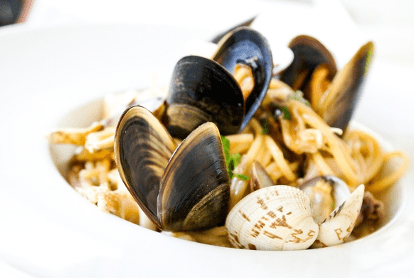
Spaghetti alle vongole (Spaghetti with clams)
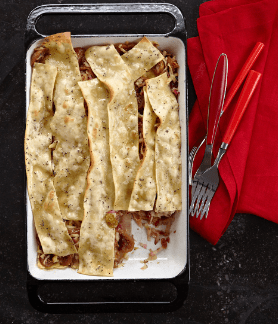
Lasagne da fornel
Tortelli Cremaschi
Maccheroni con le noci
In Italy, Christmas Day is celebrated by families over a large lunch and where meat is brought back into meals. Historically, especially in Southern Italy, Christmas Day was the time for poor people to eat like rich people. Typical pasta dishes on Christmas Day that are also eaten on other Catholic holidays such as Easter include tortellini in brodo (tortellini in broth) and pasta al forno (an “everything but the kitchen sink” baked pasta).
As much as I love pasta, there are other dishes other than pasta for holidays. To learn more about traditional Italian dishes throughout the regions, check out this link.
Thanks for reading 🙂
Sources:
https://www.italymagazine.com/featured-story/italys-christmas-eve-pasta
How Italians Do Christmas: The Foods You’ll Find on Every Table
https://www.eataly.com/us_en/magazine/culture/holidays-from-north-to-south/
Buongiorno tutti! This week’s post is about an olive oil tasting field trip my class went on.
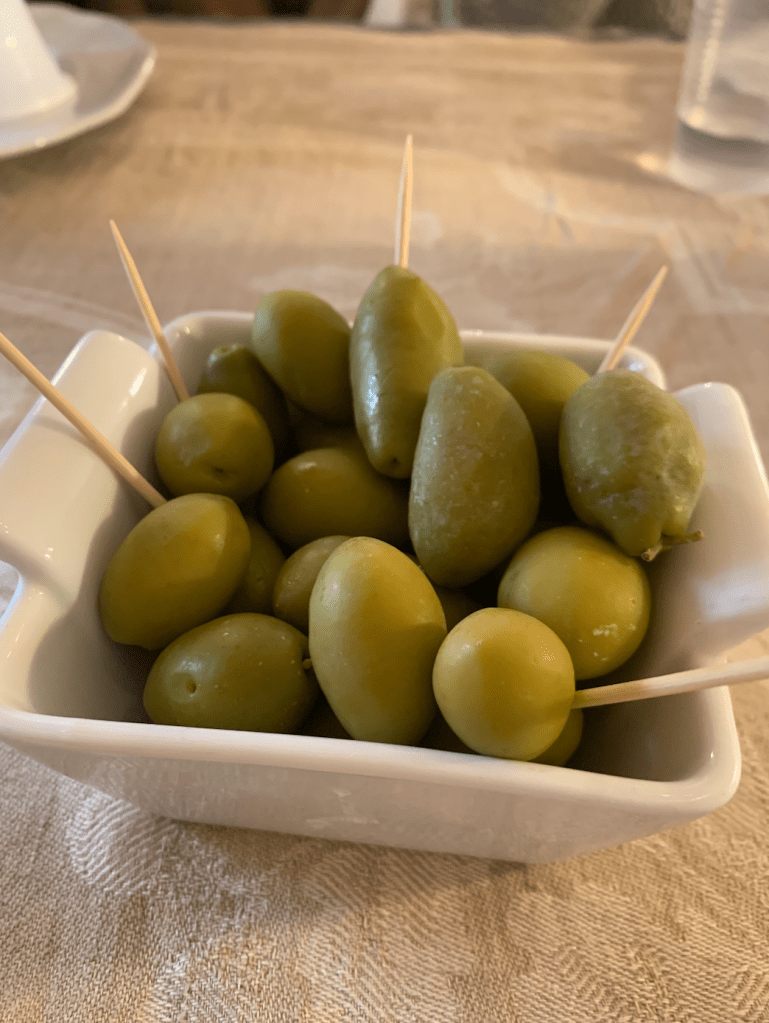
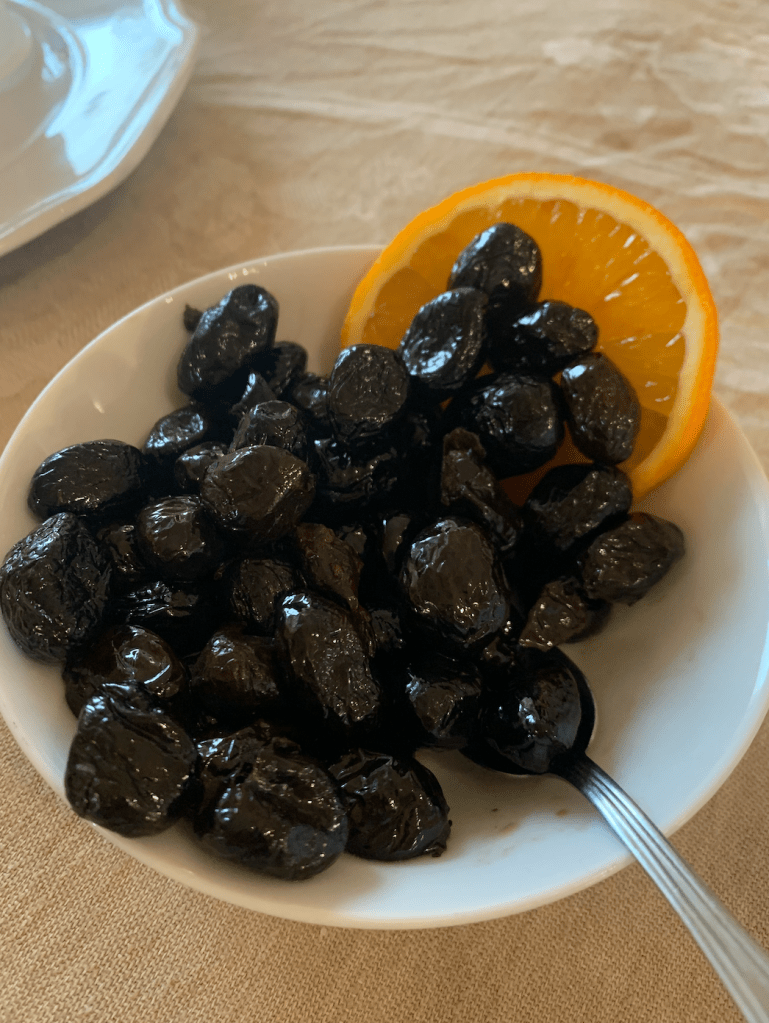
Personally, I’m not a huge fan of whole olives, but I do love olive oil. I did, however, taste the different olives we were given as part of the experience. There is a noticeable difference in taste and smell between the two olive types we tasted.
We filled three little cups with different quality olive oils to prepare for the tasting. This was a very similar experience to wine tasting. To start of the tasting, we rubbed the top and bottom of the cup between our two clasped hands and swirled the cup. This released the aroma and warmed the oil. Much like wine tasting, we stuck our nose in the cup and smelt the oil. Next, we took a tiny slurp of the oil and tried to decipher which flavor was present. Between the tasting of each of the three olive oils, we cleansed our palates with apple slices.
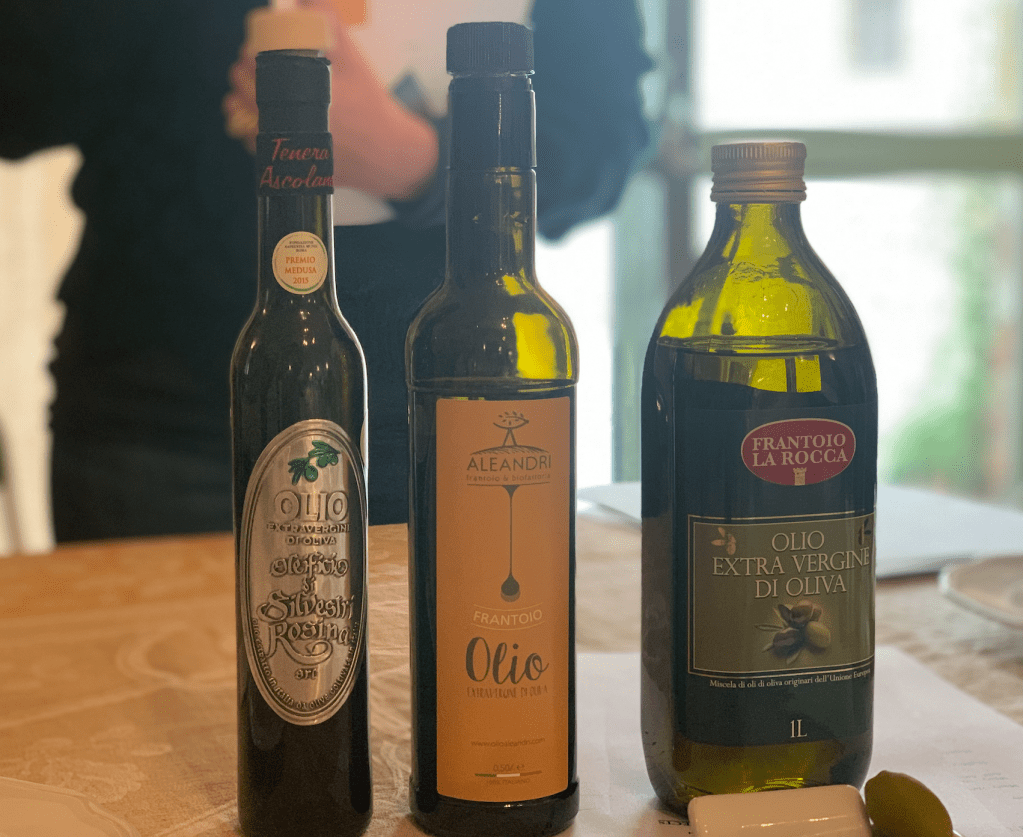
The olive oil on the left (shown in the picture above) was the most expensive and was a higher quality olive oil. The taste was bitter and a little fruity. You could feel the bitterness of the olive oil in the back of your throat and taste the fruitiness of tomato and grass. The next olive oil was a middle of the line oil in regards to price and quality; there was an almond flavor. Lastly, the olive oil on the right was the least expensive and the lowest quality. This olive oil was pungent along with the negative tastes of fusty, musty, and sour. This is the olive oil my roommates and I chose to cook with in our apartment and we were told many Italians go for a cheaper olive oil for cooking as well.
Here is a link if you would like to learn more about the flavors and tastes to look for when tasting olive oil.
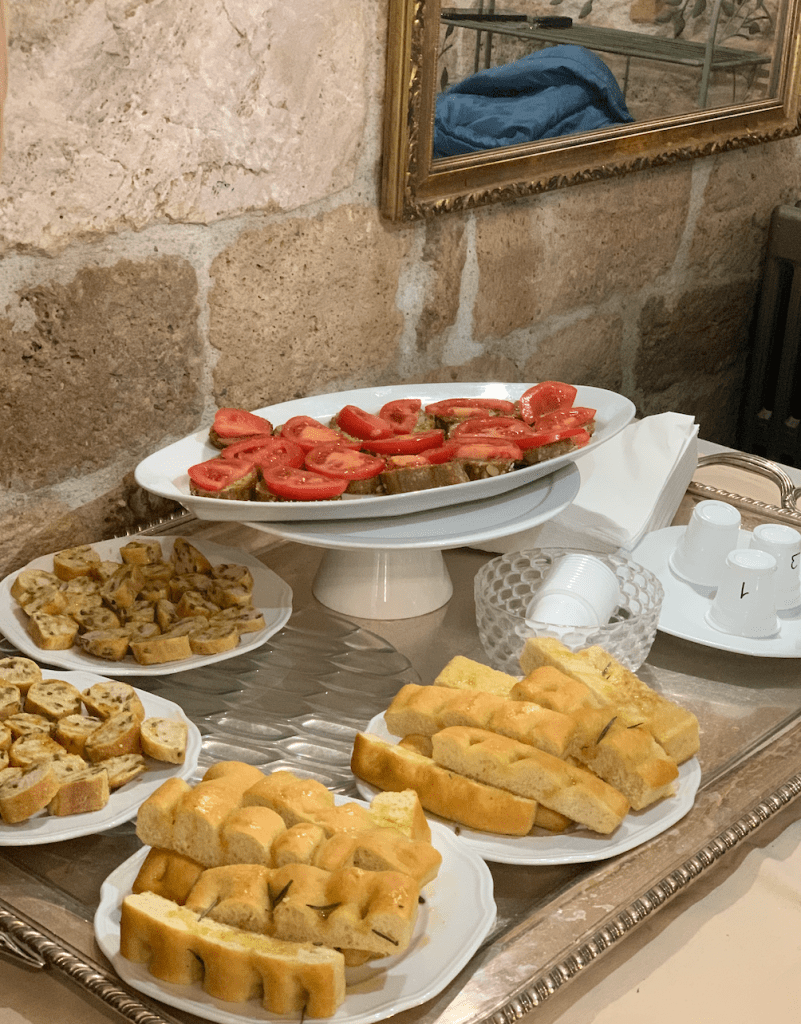
We were also able to enjoy delicious foods at the end of our tasting. Including vegetables, bread with olive oil and tomato, focaccia bread, and bread with olives.
Ciao – Thanks for reading!
For class today, my classmates and I went to a local bakery in Ascoli Piceno called L’Assalto Al Forni.
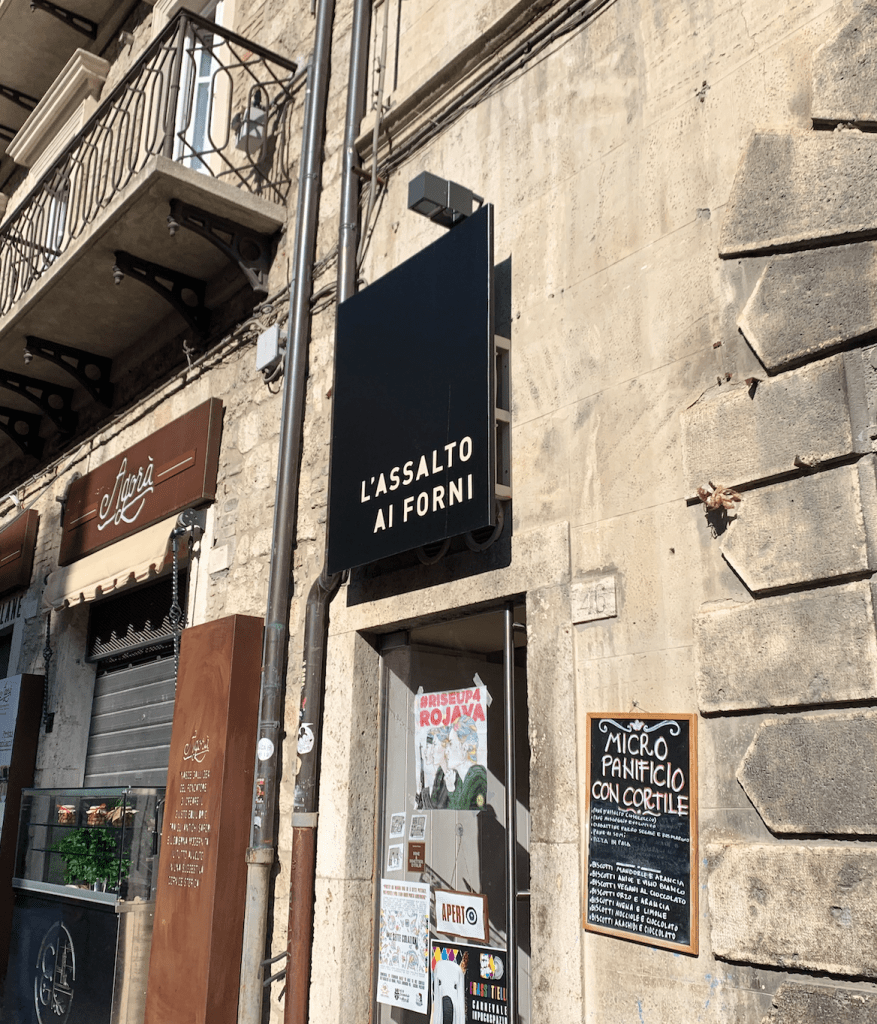
The owners, Lorenzo and Lorenza just recently opened their bakery last year. It is in the location of Lorenza’s previous family home, but due to an earthquake in 2016 that caused structural issues, it was deemed unfit to live in. You can tell Lorenza loves being back near her family home and bringing the life back that was once there.
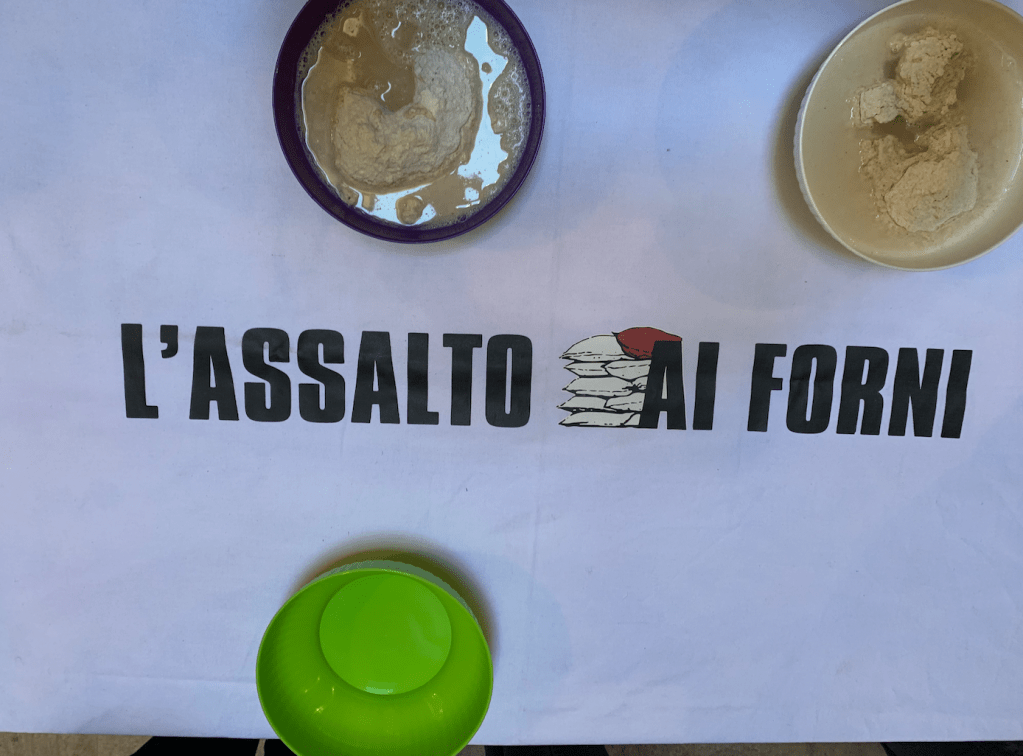
The sourdough bread we baked was made using a traditional method with base ingredients of flour, water, and yeast — then later adding salt or other fillings. At L’Assalto Al Forni, flour that are derived from ancient grains are used. Ancient grains have not gone through genetic mutations, therefore the strength the gluten and increasing the yield.
Lorenza says she uses ancient grains for 3 main reasons:
Important steps to create exceptional dough is folding the dough using wet hands. You take dough from one side of the bowl and fold in over the main body to the opposite side of the bowl. Dividing the dough, reshaping, resting, more shaping, and the final fermentation processes are the following important steps. To learn more, click here.
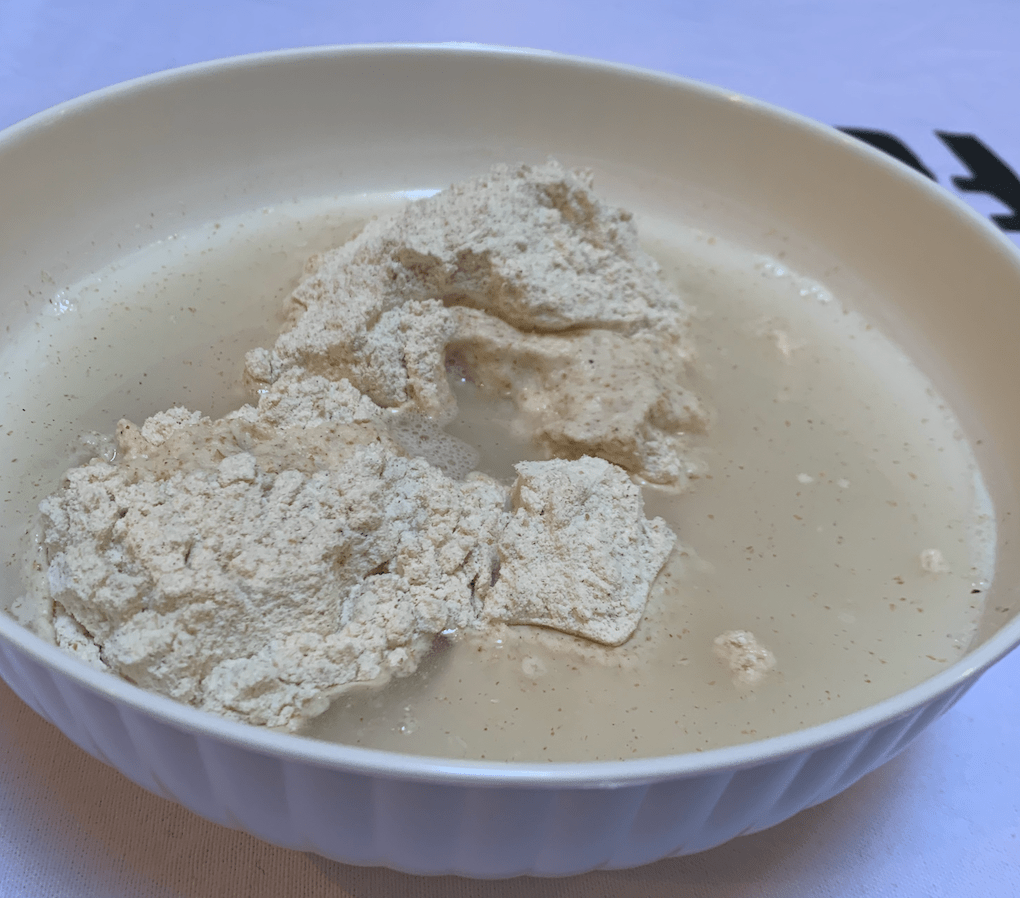
During the kneading process is when gluten is formed. It is when two proteins are mixed with water and then kneaded. The gluten in the flour form a gluten network that holds carbon dioxide (formed during fermentation).
Once myself and my classmates were done creating our dough, Lorenza provided us with samples of bread and pizza.
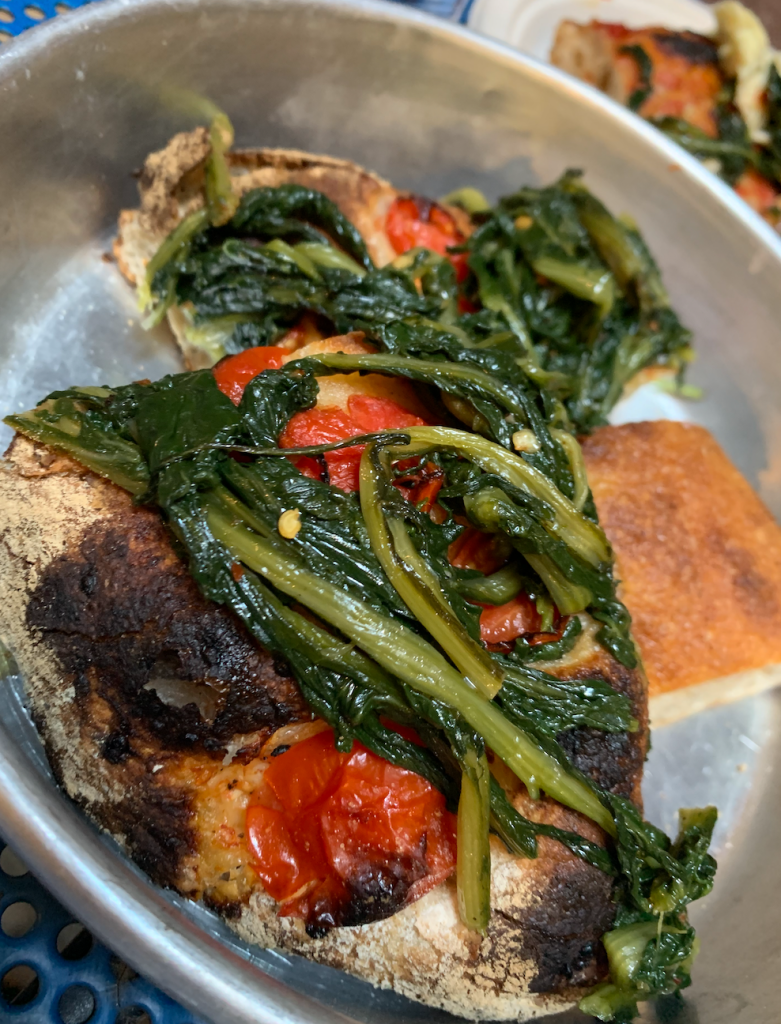
My favorite pizza we tasted was a vegan pizza with local potatoes and artichokes. All the flavors came together perfectly in the unique pizza I would normally not see back in America. Other pizzas we tried was a classic Roma pizza with greens, mozzarella, and tomato and a mushroom and cheese pizza. Overall, everything we tasted was absolutely delicious — I would eat Lorenzo and Lorenza’s food everyday if I could.
Caio tutti! This afternoon my classmates and I were given the chance to go to a pizzeria, La Nicchia, located in Ascoli Piceno. We were taught how to prepare the perfect pizza dough and the importance of each ingredient and techniques.
The recipe:
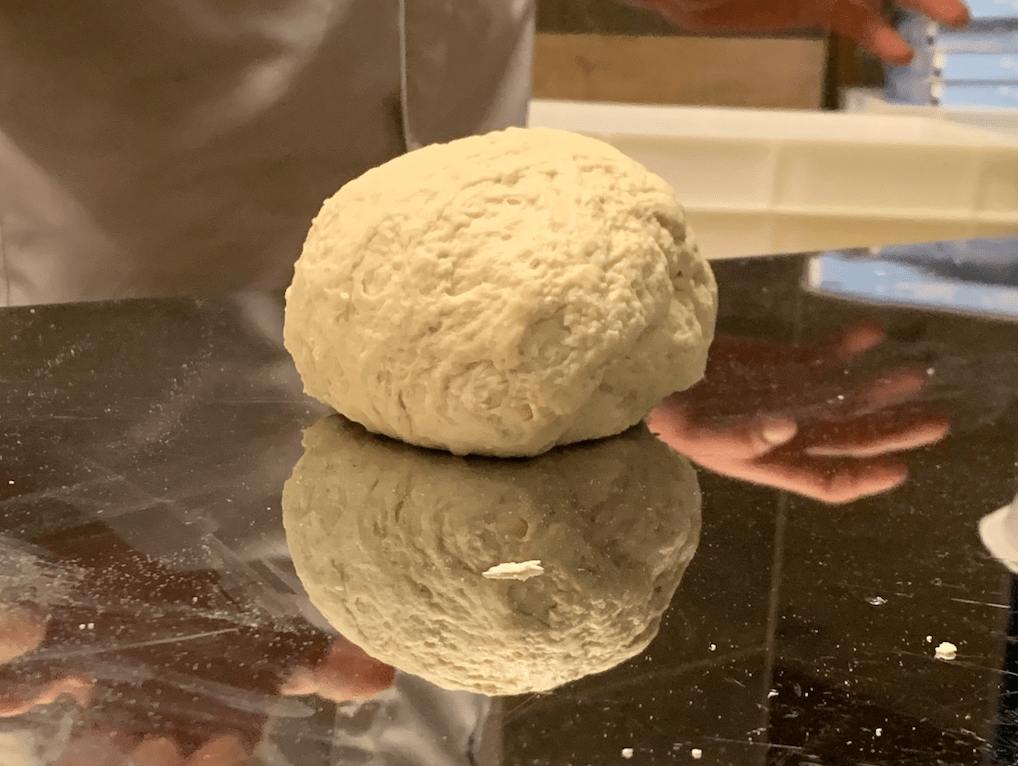
The recipe we used is enough to make 3 personal pizza pies!
Plus, a little tip from the chef was to avoid kneading pizza dough with warm hands to prevent the dough from becoming too sticky.
The cooking time for the pizza is 2-3 minuets in the 400-420 degree Celsius brick oven.
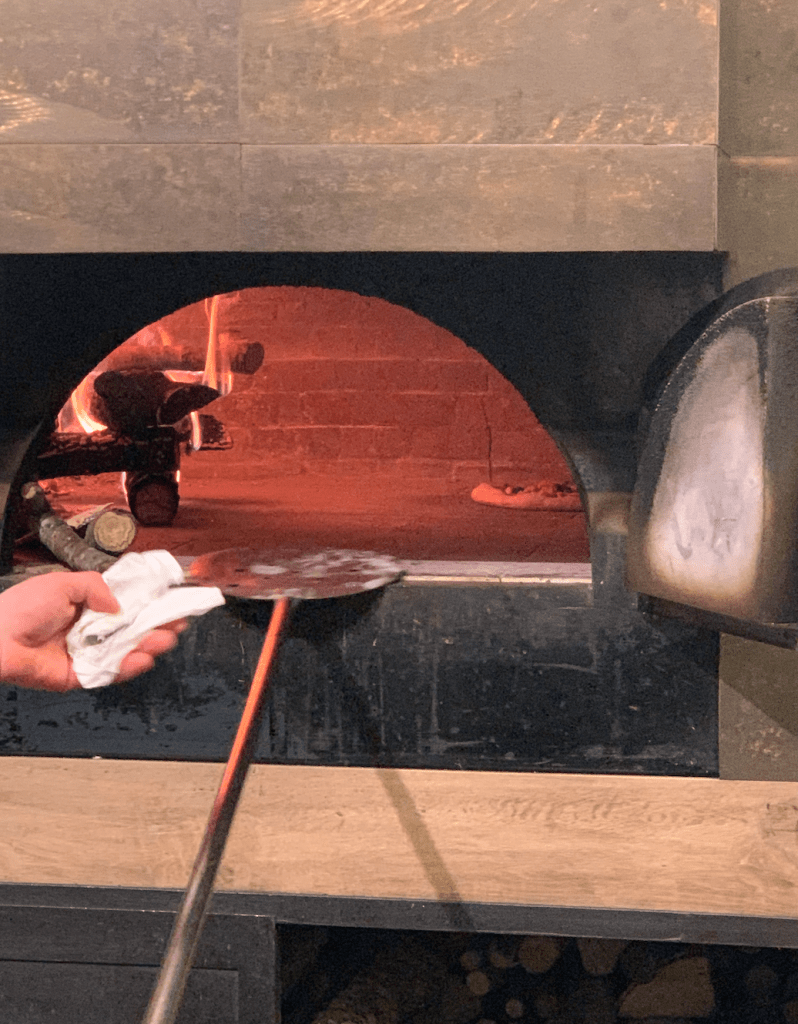
In Italy, there are different types of flours used, compared to the U.S. The flour is refined and classified by either type 2, 1, 0, 00. We used type 00 flour for our dough, which is the most refined. La Nicchia has unique flour options too! Flours such as blue corn, buckwheat, and rice flour. To learn more about the different classifications of flours, click here.
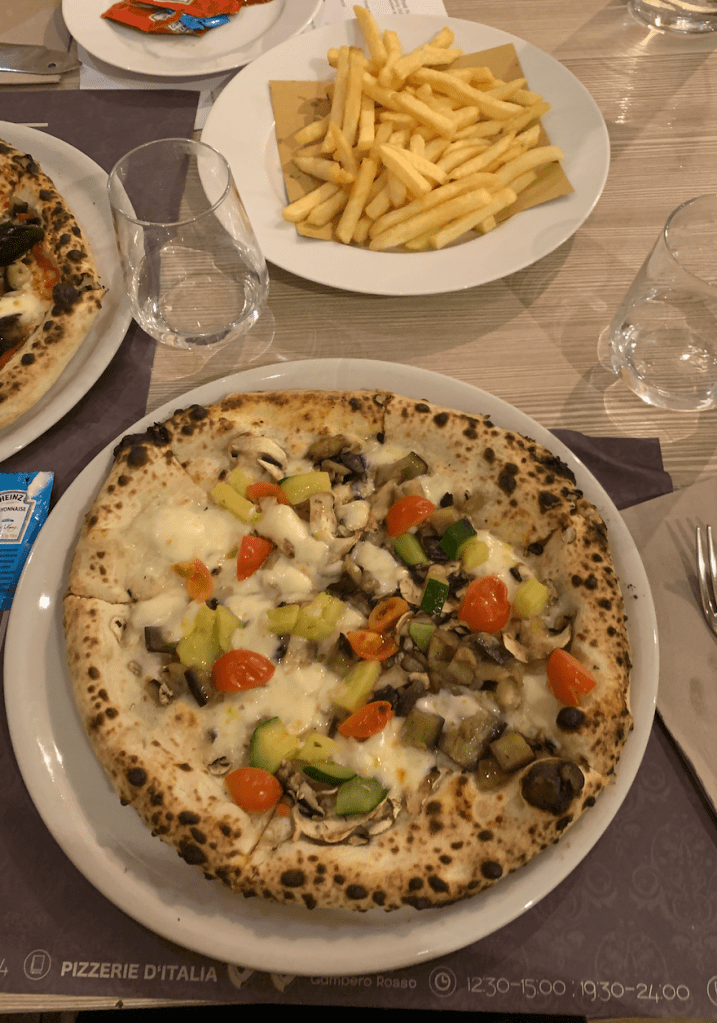
While waiting for your pizza to be made, why not munch on some French fries!? Here in Italy this is a common appetizer to order when going out to eat pizza.
There was a lot of anticipation building up while waiting for my pizza to cook in that 2-3 minuet window — it looked amazing! I decided to top my pizza with veggies and mozzarella cheese, which was a great choice (called Vegetariana on the menu). Knowing the process and care that goes into crafting a pizza from scratch makes it taste one hundred times better.
This is an example post, originally published as part of Blogging University. Enroll in one of our ten programs, and start your blog right.
You’re going to publish a post today. Don’t worry about how your blog looks. Don’t worry if you haven’t given it a name yet, or you’re feeling overwhelmed. Just click the “New Post” button, and tell us why you’re here.
Why do this?
The post can be short or long, a personal intro to your life or a bloggy mission statement, a manifesto for the future or a simple outline of your the types of things you hope to publish.
To help you get started, here are a few questions:
You’re not locked into any of this; one of the wonderful things about blogs is how they constantly evolve as we learn, grow, and interact with one another — but it’s good to know where and why you started, and articulating your goals may just give you a few other post ideas.
Can’t think how to get started? Just write the first thing that pops into your head. Anne Lamott, author of a book on writing we love, says that you need to give yourself permission to write a “crappy first draft”. Anne makes a great point — just start writing, and worry about editing it later.
When you’re ready to publish, give your post three to five tags that describe your blog’s focus — writing, photography, fiction, parenting, food, cars, movies, sports, whatever. These tags will help others who care about your topics find you in the Reader. Make sure one of the tags is “zerotohero,” so other new bloggers can find you, too.


 Megan's Italian Table